
Back to school season means shopping for pencils and notebooks, markers and crayons, backpacks and lunchboxes. But as you work through that list, don’t forget to ask one more important question: Is your child in the best place they can be visually to start the school year?
An eye exam is an important part of preparing for school. Children depend on their vision for reading, seeing the board, using computers, playing sports and interacting with the world around them. Yet sometimes children don’t know that blurry vision is blurry. If that is how they have always seen the world, it may simply feel normal to them.
A Vision Screening Is a Great Start
There are many opportunities for a child’s vision to be screened, including at school or during a visit to the pediatrician. These screenings are valuable tools for identifying children who may need to be referred to an eye care provider.
However, a vision screening is not the same as a comprehensive eye examination.
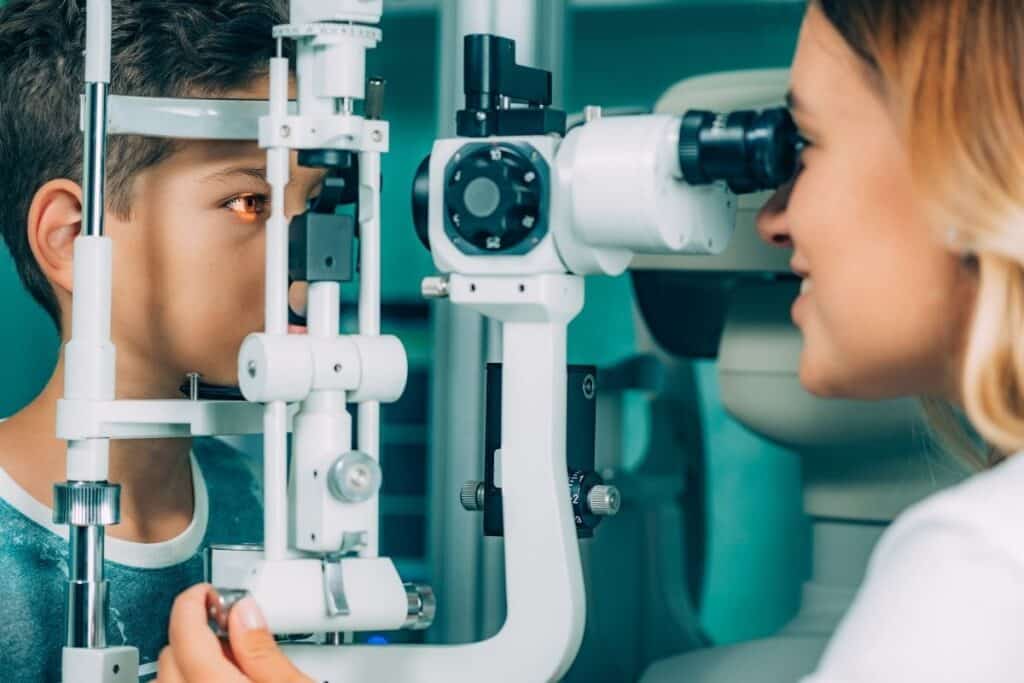
An examination with an eye doctor goes beyond determining how well a child can see an eye chart. It evaluates the child’s visual needs, how the eyes are functioning and the health of the structures of the eyes. It also provides an important baseline that can be used to identify and manage changes in the future.
Sometimes there are clues that a child may be struggling visually. Parents may notice squinting, sensitivity to bright lights, closing one eye during near tasks or even avoiding certain activities altogether. Vision problems can also interfere with reading, attention and classroom performance. But remember, a child doesn’t have to complain about their vision for a problem to exist.
Nearsightedness: We Can Do More Than Prescribe Stronger Glasses
One of the most important conversations parents can have with their eye doctor today is about myopia, commonly known as nearsightedness.
Myopia causes objects in the distance to appear blurry and frequently begins during childhood. As the eye grows, myopia can progress, which may mean a stronger glasses or contact lens prescription from one year to the next.
In the past, parents may have expected that the solution was simply to replace those glasses with a stronger prescription. Today, we can do more.
Myopia management includes treatments specifically designed to help slow the progression of nearsightedness in children. Depending on the child, options can include specially designed eyeglass lenses or specialty contact lenses, as well as other approaches recommended by an eye doctor.
I sometimes compare myopia management to orthodontics. Just as orthodontic treatments can help guide or maintain the position of teeth, myopia management lenses are designed to help influence how the eye grows. Slowing excessive eye growth during childhood matters because higher levels of myopia are associated with an increased risk of certain eye diseases later in life.
So, if your child’s prescription seems to get stronger every year, ask your eye doctor a simple question:
“Is there something we can do to help slow my child’s nearsightedness?”
Don’t Forget the Outdoors
Our children’s visual environments have changed, too. Schoolwork, tablets, phones and other near activities are a significant part of everyday life.
One simple habit families can encourage is more time outdoors. Outdoor time has been associated with a lower risk of children developing myopia and may help delay its onset. Encourage children to put down the screen, head outside and give their eyes, and the rest of their bodies, some time in the outdoors.
A Special Reminder for Families Living With Diabetes
For children living with diabetes, comprehensive eye care is especially important. Diabetes can affect the blood vessels and tissues of the retina, and changes can occur before a person notices a difference in their vision.
Talk with your child’s health care and eye care providers about the appropriate timing of comprehensive dilated eye examinations and make recommended eye care part of their ongoing diabetes management.
Put Vision on This Year’s Checklist
As an optometrist for more than 20 years, and someone who has worn glasses since age seven, I understand both personally and professionally the value of comprehensive eye care.
Many of the vision problems we identify can be managed, and sometimes the solution is as straightforward as the right pair of glasses or contact lenses. Today, we also have opportunities such as myopia management that may help influence a child’s eye health well beyond the classroom.
So while you’re checking off the pencils, notebooks, backpacks and lunchboxes, add one more item to your family’s back to school list: eye health.
Your child may never tell you that their world is blurry because, to them, that may simply be how the world has always looked.