
As someone who enjoys learning more about diabetes and the many ways we can improve health and well-being, I had fun doing a little research for this article! It is amazing to look back at the discoveries and medical advancements that have transformed the lives of individuals living with diabetes. Thousands of years ago, a diagnosis of diabetes, particularly Type 1 diabetes, was often a death sentence. Ancient Egyptian writings dating back to approximately 1500 BC described symptoms such as excessive urination and extreme thirst. Around the 5th century BC, physicians in India recognized that some individuals had sweet-tasting urine that attracted ants, leading to the term that translated into “honey urine.” The word diabetes, meaning “to pass through,” was introduced in ancient Greece, and centuries later, the word mellitus, meaning “honey-sweet,” was added to describe the condition more specifically. By the 1800s, researchers were beginning to understand the pancreas’s role in diabetes, with a pivotal discovery in 1889 showing that removing the pancreas from dogs caused severe diabetes. Before effective treatments existed, some physicians prescribed extreme starvation diets in an attempt to extend patients’ lives. These early observations laid the groundwork for the breakthroughs that would follow.
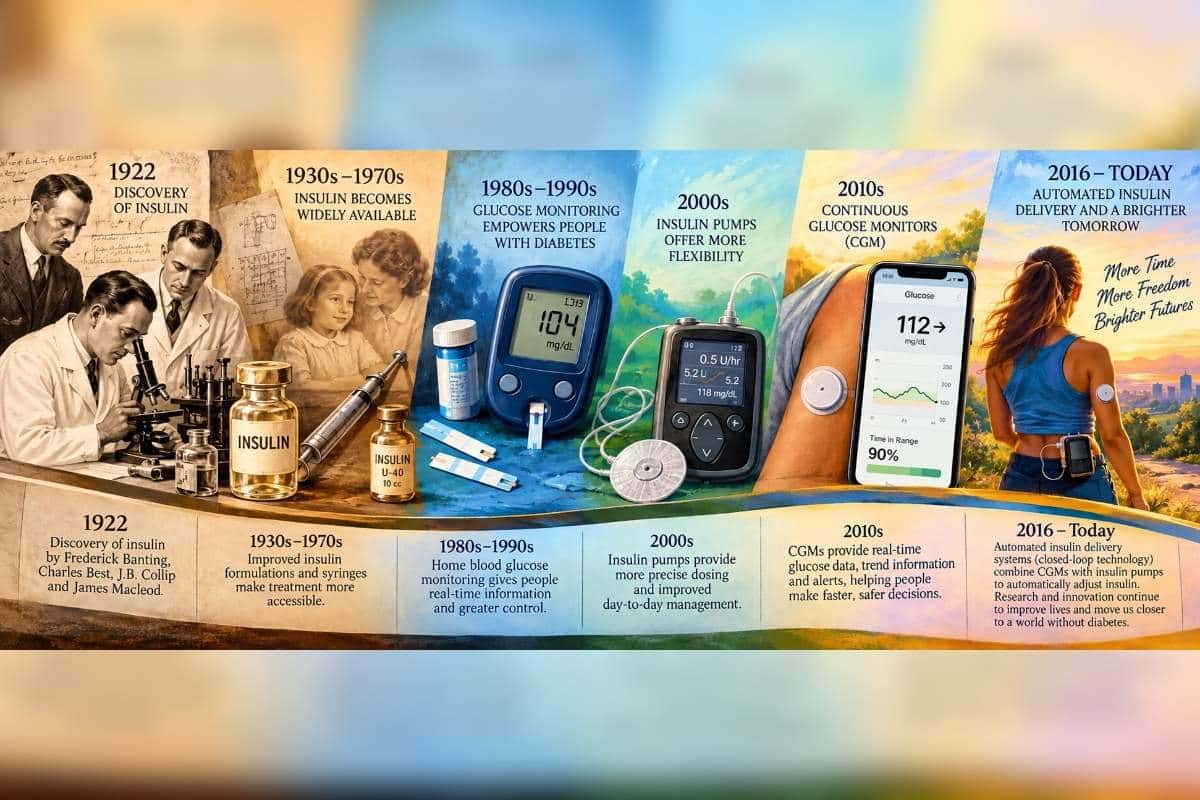
One of the most remarkable turning points in diabetes history occurred in 1921 and 1922 with the discovery and development of insulin for human use. Canadian researchers Frederick Banting and Charles Best, working under John Macleod, investigated pancreatic secretions that could help regulate blood sugar. Chemist James Collip later helped purify the extract for human treatment. In January 1922, 14-year-old Leonard Thompson, who was critically ill with Type 1 diabetes, received an insulin injection. After an initial attempt required further purification, the treatment was successful, and his condition improved dramatically. This breakthrough transformed diabetes from a frequently fatal illness into a condition that could be managed over the long term. Banting and Macleod received the combined Nobel Prize in Physiology or Medicine in 1923 for their contributions in the discovery of insulin. It is difficult to imagine the hope this discovery brought to families who previously had very few options. Insulin remains essential to diabetes care today, particularly for people with Type 1 diabetes, and its development continues to stand as one of medicine’s most significant achievements.
As insulin treatment became more widely available, researchers continued working to make diabetes care more effective and accessible. In 1936, British physician Harold Himsworth published research distinguishing insulin-sensitive and insulin-insensitive forms of diabetes, helping establish the foundation for our modern understanding of Type 1 and Type 2 diabetes. During the 1950s, oral medications began offering additional treatment options for people with Type 2 diabetes. Sulfonylureas, introduced in the 1950s, stimulate the pancreas to release insulin, while metformin, developed for clinical use during the same decade, helps the body manage blood sugar more effectively. Another major advancement came in 1978, when scientists developed genetically engineered human insulin using recombinant DNA technology. This innovation led to the introduction of Humulin in the early 1980s, reducing reliance on insulin derived from animals. Diabetes management tools were also evolving. Disposable plastic syringes, insulin pens, and portable insulin pumps made administering insulin more convenient and practical. Each advancement represented another step toward giving individuals greater flexibility, independence, and control over their daily diabetes management.
The last several decades have brought extraordinary progress in diabetes technology and treatment. Early urine-testing methods eventually gave way to portable blood glucose meters, allowing people to check their blood sugar more directly and conveniently. In 1999, the U.S. Food and Drug Administration approved the first continuous glucose monitoring system, opening the door to wearable technology that tracks glucose levels throughout the day. Today, continuous glucose monitors can help users recognize patterns, identify highs and lows, and make more informed decisions about their care. In 2016, the FDA approved the first automated insulin delivery system, sometimes called an artificial pancreas. These systems combine glucose monitoring technology with an insulin pump and an algorithm that adjusts insulin delivery in response to changing glucose levels. Medication research has also expanded beyond blood sugar control alone. GLP-1 receptor agonists and SGLT2 inhibitors have become important treatment options for many people with Type 2 diabetes, with certain medications demonstrating significant cardiovascular and kidney benefits for appropriate patients. These advances reflect a growing understanding that diabetes care involves protecting the whole person, not simply managing a glucose reading.
Looking back at the history of diabetes reminds us how far medical science has come—and how much hope continued research brings for the future. From ancient observations about thirst and frequent urination to insulin injections, oral medications, wearable glucose monitors, and automated insulin delivery, each discovery has helped improve the lives of millions of people. I truly enjoyed exploring this history because it reinforced for me that learning about diabetes is an ongoing journey. New research, treatments, technologies, and prevention strategies continue to create opportunities for better health and quality of life. At the Diabetes Coalition of York County, we believe that education and awareness empower individuals to make informed decisions about their health, whether they are living with diabetes, caring for someone who has it, or working to reduce their risk. Understanding the past helps us appreciate today’s resources and look forward to tomorrow’s possibilities. The story of diabetes is not just a story about a disease; it is a story of discovery, perseverance, and the remarkable difference that medical innovation can make in people’s lives.