
Back in 2022, I wrote a blog about continuous glucose monitors (CGMs). Since then, a lot has changed—except one thing: people still love them!
Today, CGMs are widely recommended and used by people living with Type 1, Type 2, or gestational diabetes. According to the American Diabetes Association, CGM is now recommended for adults with Type 2 diabetes whether they use insulin, non-insulin injectable glucose-lowering medication, or oral glucose-lowering medication.
What is a CGM?
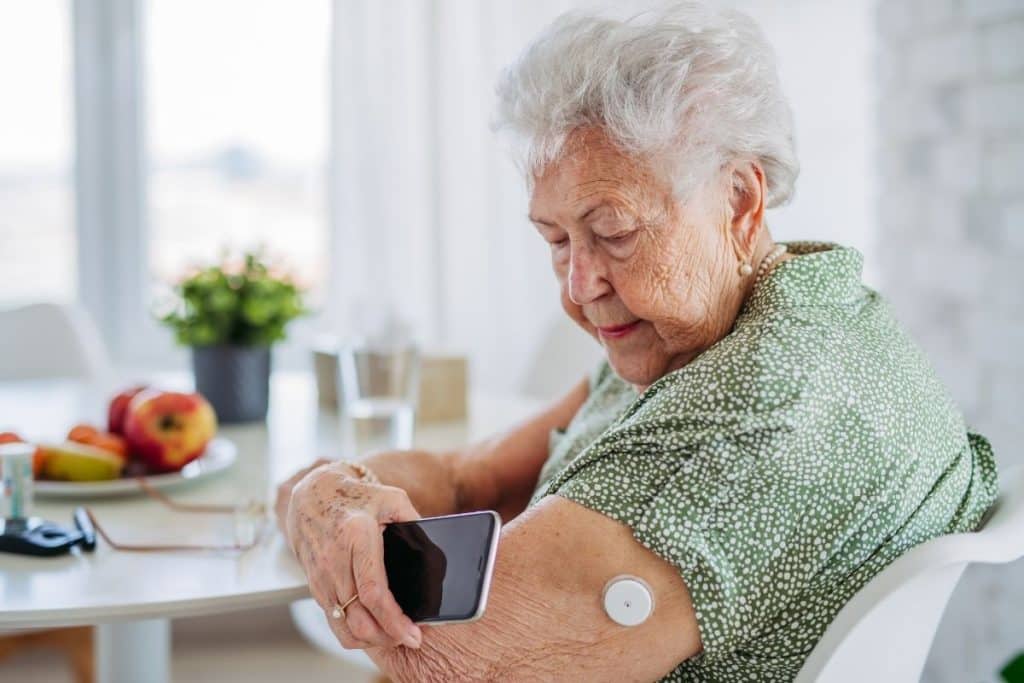
A continuous glucose monitor is a device that collects glucose data every few minutes. A small sensor—about the size of a nickel, or even as small as a penny—is applied to the back of the arm or the abdomen.
Depending on the brand, the sensor can remain in place for 10–15 days:
- Dexcom G7 – 10 day wear
- Abbott FreeStyle Libre – 14 to 15 day wear
- Eversense 365 – 1-year implanted sensor
(This system used to require a 90-day replacement.)
The sensor reads glucose from the interstitial fluid, located just underneath the skin. Your readings can be displayed on a smartphone, reader device, or even an Apple Watch.
Why People Love CGMs
CGMs allow users to:
- Share data with family or caregivers
- See 24/7 glucose trends
- Reduce fingersticks
- Track glucose during meals, sleep, stress, or exercise
Parents love the ability to monitor their children while they’re at school. Caregivers for older adults appreciate remote monitoring as well.
Healthcare providers use CGM data to evaluate patterns, adjust medications, and study Time in Range (TIR)—the percentage of time glucose stays between 70–180 mg/dL.
TIR gives a clearer picture of diabetes management than A1c alone because it identifies periods of both high and low glucose.
Current CGM Devices Available
Prescription-based systems:
- Dexcom G6 & G7
- Abbott FreeStyle Libre 2 / Libre 3 / Plus versions
- Medtronic Guardian (7-day system within pump therapy)
- Eversense 365 (implanted sensor)
Over-the-Counter CGMs
Over-the-counter systems are now available without a prescription:
- Dexcom Stelo (15-day sensor)
- Abbott Lingo (14-day sensor)
These are intended for adults age 18 and older with Type 2 diabetes or prediabetes—not for those at risk of hypoglycemia. A compatible smartphone is required.
These systems can help users see how food choices, sleep, and exercise affect glucose throughout the day.
Important Safety Information
Always keep a standard glucose meter available. You may need fingerstick confirmation if:
- Your symptoms do not match your CGM reading
- The sensor falls off
- You experience low blood sugar
- The device requires warm-up time
FreeStyle Libre Safety Notice
Abbott has reported that certain FreeStyle Libre 3 and Libre 3 Plus sensors may produce falsely low glucose readings.
As of November 14, 2025, the company has reported:
- 736 injuries
- 7 deaths
Users should verify their sensor serial numbers by visiting the Abbott sensor confirmation website, www.freestylecheck.com and selecting “CONFIRM SENSOR SERIAL NUMBER.”
If you use these systems, be sure to check your packaging to confirm whether your sensors are affected before wearing them.
How to Get a CGM
Working with a Durable Medical Equipment company (DME) can make the process easier. Once they receive a prescription from your provider, they can:
- Process insurance paperwork
- Ship supplies directly
- Assist with replacements
If you don’t have a compatible smartphone, most brands offer reader devices as an alternative.
Should You Try a CGM?
If you haven’t tried one yet, talk with your provider. Many patients benefit from a one-month trial to see how CGM can improve daily diabetes management.
Resources for More Information
- Taking Control of Your Diabetes: tcoyd.org
- American Diabetes Association: diabetes.org
—
About the Author
Dianna Morrow is a Certified Diabetes Care and Education Specialist and Registered Nurse at Encompass Health Rehabilitation Hospital of York, Pennsylvania. She is the lead facilitator of the Diabetes Protocol Team and an active member of the Diabetes Coalition of York County, PA.